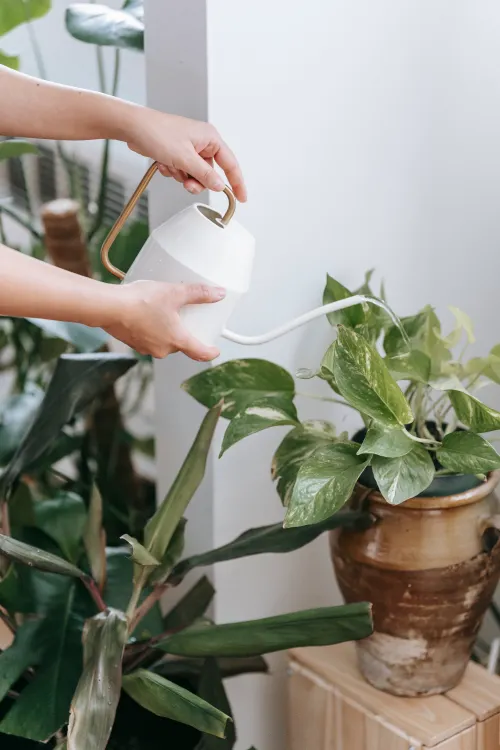
The Biggest Mistake: Watering Too Often
Many beginner plant owners actually kill their plants by watering too diligently. Constantly damp soil makes roots rot without being noticed. In fact, understanding each plant's rhythm matters far more than just watering as often as possible.
The right way: check the soil moisture by poking a finger 2-3 centimeters deep, then water only when the top layer feels dry. Make sure the pot has drainage holes so excess water can escape from the bottom. Standing water in a pot is the main trigger for root rot and mold growth.
The Right Light, Pot, and Soil Mix
Place plants in a spot that suits their light needs. Most houseplants actually prefer bright indirect light, not harsh midday sun that can scorch leaves. Keep them away from air conditioners or heaters that cause extreme temperature swings; the ideal temperature for most houseplants is 18-24 degrees Celsius.
Use a loose growing medium, for example a mix of fertile soil and compost, so air circulation inside the pot stays healthy. As plants grow, move them to bigger pots every 1-2 years to give roots room and replace soil that has lost its nutrients.
Nutrition, Clean Leaves, and Pest Watch
Feed plants while they are actively growing, usually once a month is enough. Nutrients replace the elements washed away with each watering, so plants can grow lush and healthy. Follow the dosage on the fertilizer packaging to avoid overfeeding.
Wipe leaf surfaces with a damp cloth regularly so dust does not clog the pores. Clean leaves make photosynthesis run more efficiently and help prevent pest attacks. Prune dry and wilted leaves or stems with clean tools to encourage new shoots.
Finally, inspect plants regularly. If leaves start yellowing or look unhealthy, check for pests like aphids or mites, then treat promptly with a natural insecticide or wash with soapy water. With proper and consistent care, houseplants can thrive and become a refreshing natural decoration every day.