
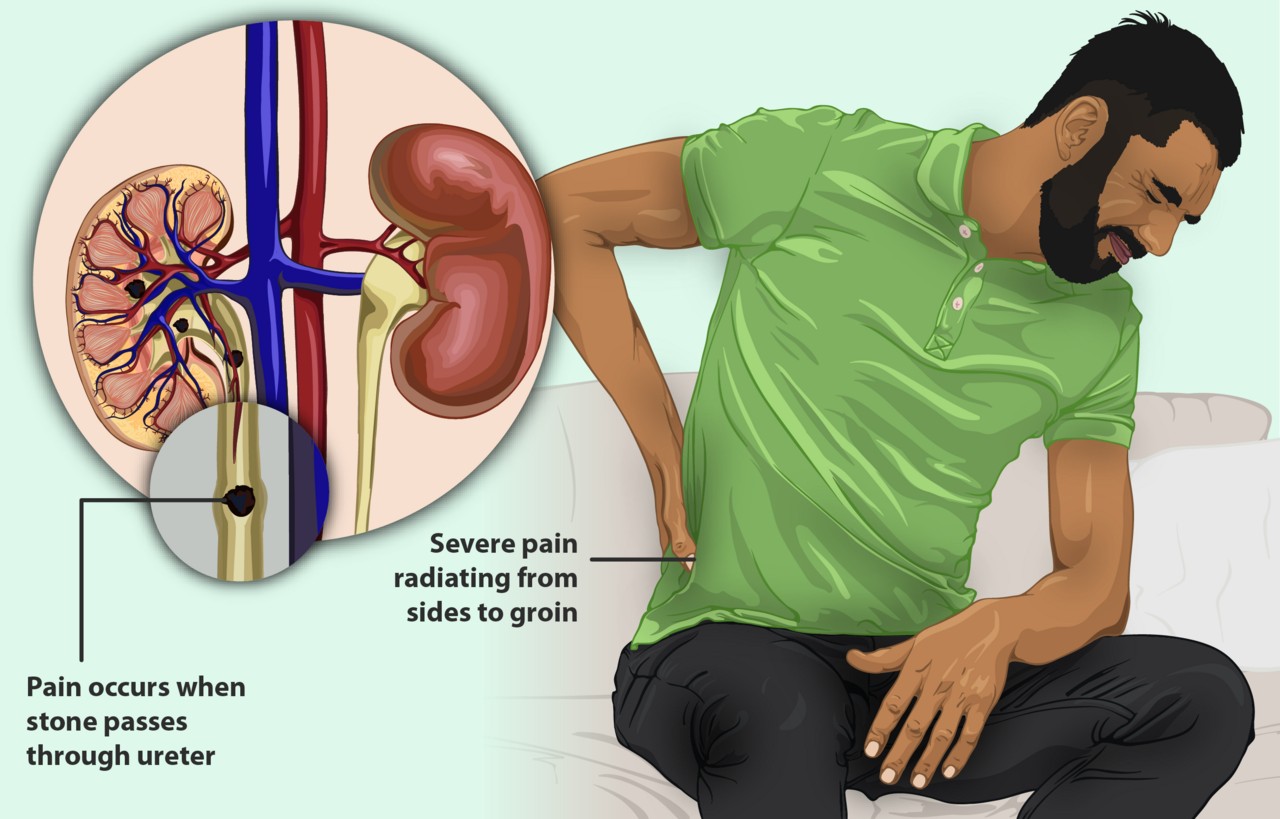
What Kidney Stones Are
Kidney stones, or nephrolithiasis, are hard deposits formed inside the kidneys from chemicals in urine. They can range from as small as sand grains to as large as peas. Although they most often affect adults, kidney stones can also occur in children.
Stones form when urine contains more crystal-forming substances — such as calcium, oxalate, and uric acid — than the fluid in urine can dilute. Not drinking enough is the most common cause, along with a diet high in salt and animal protein, obesity, and genetic factors.
Kidney Stone Symptoms to Watch For
A kidney stone usually causes no symptoms until it moves within the kidney or enters the ureter (the tube connecting kidney and bladder). When lodged, the stone blocks urine flow and makes the kidney swell — this is what causes the severe pain.
According to Alodokter and Mayo Clinic, symptoms include: severe pain in the side, back, or lower belly spreading to the groin; pain that comes in waves and varies in intensity; pain or burning while urinating; cloudy, brownish, or bloody urine; more frequent urination; nausea and vomiting; and fever with chills if infection is present. Small stones sometimes pass on their own without symptoms.
Dietary Restrictions for Kidney Stone Patients
According to Alodokter, to keep stones from growing or reforming, patients should follow these restrictions. First, limit high-oxalate foods such as spinach, soy, almonds, potatoes, okra, and beets — excess oxalate can bind to calcium and trigger stone formation.
Second, limit high-salt foods such as fast food and canned foods, because excess salt raises calcium levels in urine. Third, avoid vitamin C supplements above 500 mg per day; get vitamin C from food instead. Fourth, drink 8–10 glasses of water daily so small stones can pass through urine.
When to See a Doctor Immediately
See a doctor promptly if you experience severe pain in the side, back, or belly that does not improve; pain with persistent nausea and vomiting; blood in urine; fever and chills signaling infection; or difficulty urinating to the point of no urine at all.
Early examination and proper treatment relieve symptoms, prevent complications, and keep kidney function optimal. Consult a doctor or health facility for diagnosis and treatment suited to your condition.


