
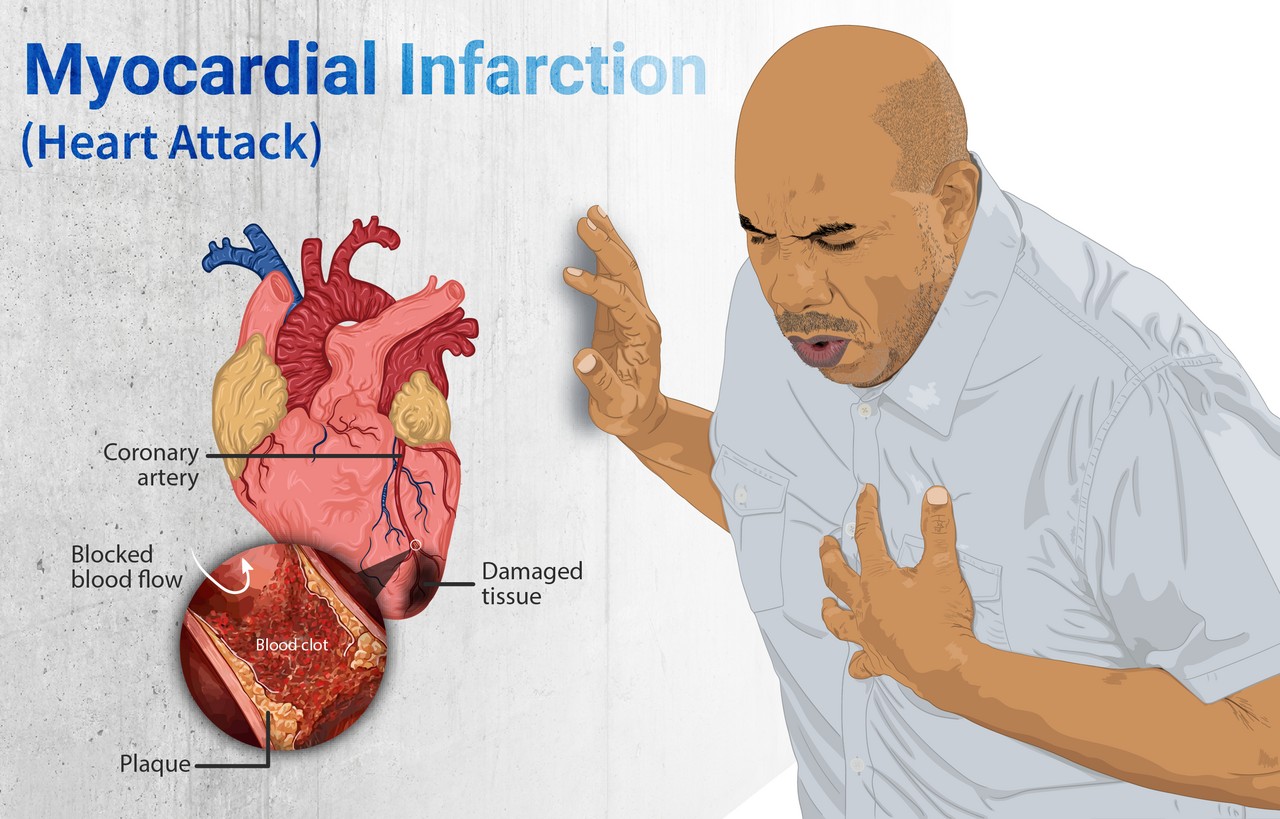
Heart Attack: When Blood Flow to the Heart Is Blocked
A heart attack occurs when blood flow to the heart muscle drops sharply or is blocked entirely. The main cause is a buildup of fat, cholesterol, and other substances (plaque) on the walls of the coronary arteries — a process called atherosclerosis. When plaque ruptures, a blood clot forms and blocks the flow, so part of the heart muscle is damaged or dies from lack of oxygen.
Medically, the condition is called myocardial infarction and is a medical emergency. According to Indonesia's Health Ministry, atherosclerosis can develop slowly without clear symptoms until blood flow to the heart muscle is disrupted. Without prompt treatment, heart muscle damage can become permanent.
Warning Signs of a Heart Attack to Watch For
According to the Health Ministry, heart attack warning signs include: pressure, squeezing, fullness, or pain in the center of the chest lasting several minutes or coming and going; and pain or discomfort spreading to one or both arms, the back, neck, jaw, or upper belly.
Other accompanying symptoms include shortness of breath, cold sweats, nausea, and lightheadedness. Mayo Clinic adds fatigue, indigestion or heartburn-like burning, and sudden dizziness. Note that some heart attacks strike suddenly, but many give warning signs hours or days in advance — for example, recurring chest pain (angina) that does not ease even with rest.
In older adults, a heart attack can even present as suddenly collapsing for no clear reason, according to the Health Ministry.
Watch Out for Atypical Symptoms in Women
Chest pain is the most common symptom, but not everyone experiences it. In some women, older adults, and people with diabetes, heart attack symptoms may seem unrelated to the heart — such as only nausea, shortness of breath with fatigue but no chest pain, or brief pain in the neck, back, or arms.
Because they are atypical, these symptoms are often mistaken for stomach problems or ordinary tiredness. The Health Ministry urges the public not to dismiss chest complaints, especially if they appear suddenly or come with shortness of breath, cold sweats, or nausea.
What to Do When Symptoms Appear
A heart attack is an emergency — every minute counts. If you or someone nearby shows these signs, call emergency services immediately or go to the nearest hospital emergency room. Do not wait hoping the symptoms will pass on their own, and avoid driving yourself if possible.
The sooner a patient receives medical help, the greater the chance of preventing wider heart muscle damage. If you have risk factors such as hypertension, diabetes, or high cholesterol, consult a doctor or health facility for regular checkups and early risk-factor control.


