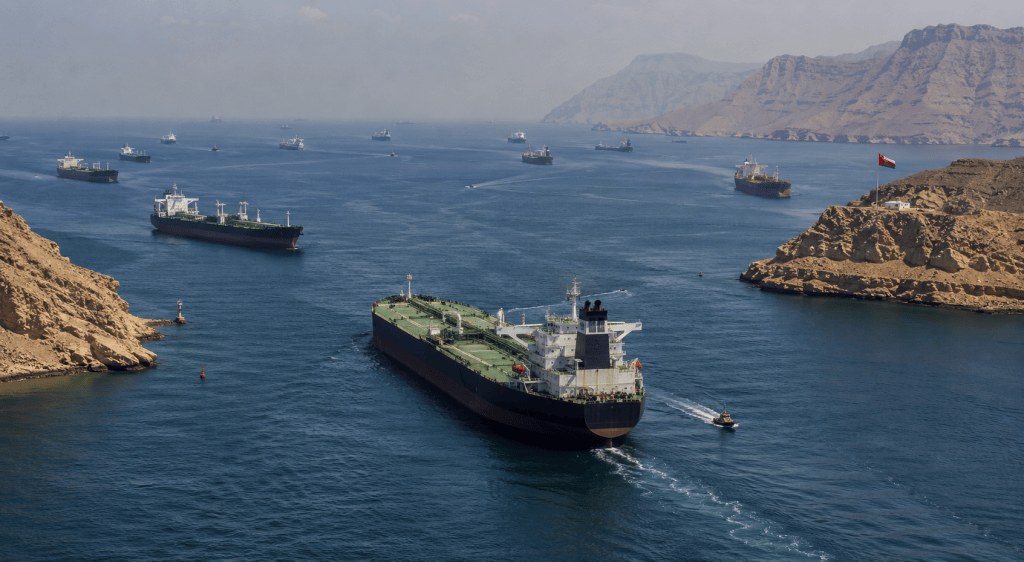
Oil Tanker Explodes in the Strait of Hormuz
An oil tanker was reported to have exploded shortly after entering the Strait of Hormuz, after the vessel allegedly deliberately switched off its Automatic Identification System (AIS).
Iranian state television broadcast the incident on Sunday (4/10/2026). "An oil tanker exploded in the Strait of Hormuz after switching off its tracking system while entering the strategic shipping corridor," the state broadcaster's report said.
Local authorities have not disclosed the ship's name or flag, the explosion's trigger, the vessel's condition, or whether any crew were harmed. Iran's Mehr News Agency had earlier reported a loud blast heard off Qeshm Island — a strategic Iranian island facing the Strait of Hormuz.
Projectiles and Mines: A String of Incidents
On Sunday (11/10/2026), the UK Maritime Trade Operations (UKMTO) reported a tanker caught fire after being hit by an unidentified projectile. The captain of the vessel, sailing out of the strait, reported the projectile hit on the ship's port side; the strike triggered a fire, but the entire crew was reported safe.
The report came hours after Iran's Islamic Revolutionary Guard Corps (IRGC) announced a naval mine incident: a supertanker carrying around 2 million barrels of oil exploded while trying to exit through the southern lane — an area not permitted by Iranian authorities. The vessel had reportedly switched off its navigation system before entering the alternative lane, becoming the third tanker to hit a mine since Saturday (10/10/2026).
Competing US-Iran Claims
Amid the string of incidents, both sides traded claims. Iran's military central command said the United States had violated a ceasefire agreement and claimed an Iranian oil tanker in the Strait of Hormuz was targeted by the US military, as reported by AFP. Iran also said its forces had attacked US military vessels in retaliation. The US itself has not commented on the situation.
Conversely, US Defense Secretary Pete Hegseth claimed Washington controls Iranian airspace and secures oil flows through the Strait of Hormuz, adding that oil shipments through the route were above pre-conflict levels. CENTCOM said it had intercepted 125 commercial vessels through 30 September, diverting 10 ships in the last week alone. Reuters also noted three Liberia-flagged vessels were hit by unidentified projectiles on 29 September.
None of these one-sided claims have been independently verified by international maritime monitoring bodies, and those responsible for some incidents remain unidentified.
Oil Prices Surge, Shipping Slows
Tensions in the Strait of Hormuz — a route normally carrying a fifth of the world's oil supply — have deepened fears of energy supply disruption. Brent crude rose to US$96.80 a barrel in early Asian trading on Monday (7/9/2026), extending a significant rally from the previous week.
Analytics firm Kpler recorded a sharp drop in traffic through the Strait of Hormuz: on 3 September 2026 only four commodity vessels transited, down sharply from the prior 10-day average of 15 vessels a day. Reuters also reported Iranian crude exports via the Strait of Hormuz had been halted for seven weeks. The latest incidents add to uncertainty over shipping security on one of the world's most vital oil trade routes.