
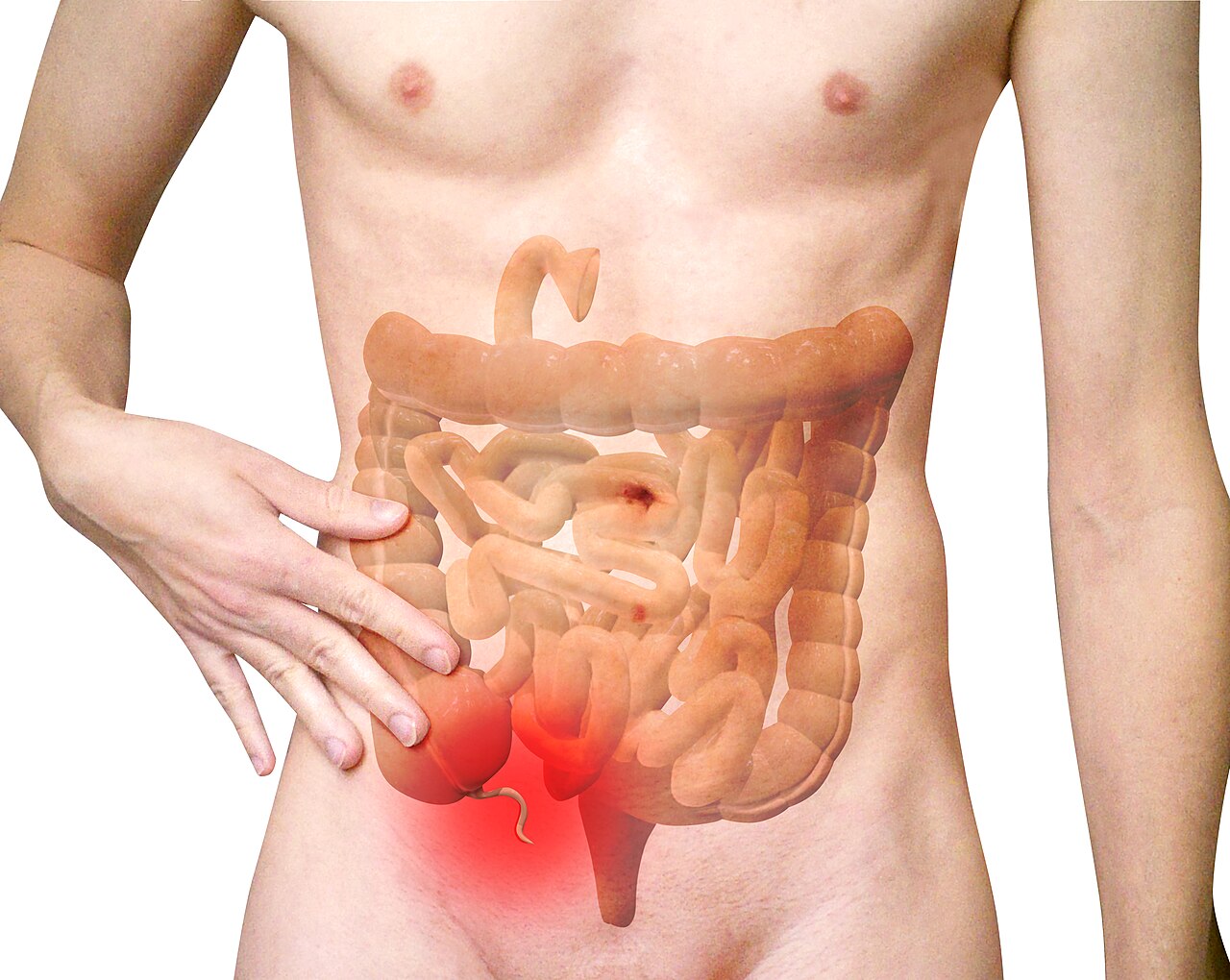
What Appendicitis Is
Appendicitis is inflammation of the appendix — a small, finger-shaped pouch attached to the start of the large intestine in the lower right abdomen. Although often considered an organ with no important function, an inflamed appendix left untreated can cause serious problems.
The condition can occur at any age but most often affects teenagers and young adults aged 10 to 30. Its main cause is a blockage of the appendix channel, most commonly by hardened stool. Once blocked, bacteria multiply inside, pressure rises, and inflammation sets in.
Appendicitis Symptoms You Must Not Ignore
Appendicitis symptoms follow a fairly distinctive pattern — and this is what must not be ignored. Pain first appears around the upper abdomen or navel, then within hours shifts to the lower right abdomen. The pain intensifies when the sufferer walks, coughs, strains, or when the abdomen is pressed.
Besides abdominal pain, sufferers typically experience nausea and vomiting, a sharp drop in appetite, mild fever, bloating, and difficulty passing gas. In children and older adults the symptoms can be atypical, so diagnosis requires extra vigilance.
The Danger of Delayed Treatment
An inflamed appendix is not a condition whose treatment can be postponed. If left alone, the appendix wall can suffer tissue damage and rupture. A ruptured appendix spills bacteria and pus into the abdominal cavity, causing infection of the abdominal lining called peritonitis — even life-threatening sepsis.
Because of this serious complication risk, abdominal pain with a pattern pointing to appendicitis must be checked at a health facility immediately. Doctors confirm the diagnosis through physical examination, especially tenderness in the lower right abdomen, supported by blood tests for signs of infection and ultrasound or CT scans when needed.
Treating Appendicitis
The primary treatment for appendicitis is surgical removal of the appendix, called appendectomy. The procedure can be done through open surgery or laparoscopy, a less invasive method with faster recovery. Surgery aims to remove the source of infection before the appendix ruptures.
Important to know: if you suspect appendicitis symptoms, do not eat, drink, or take painkillers, antacids, laxatives, or warm compresses on your own, as these can worsen the condition or obscure the diagnosis. Consult a doctor or go to the nearest hospital emergency unit promptly for proper, fast treatment.


